.svg "novoserve-dedicated-server-provider-logo")
Unlike virtualized environments that use a hypervisor to slice a machine into smaller instances, dedicated server hosting provides a direct bare metal connection between the operating system and the underlying silicon. Every CPU cycle, every gigabyte of RAM, and the full capacity of the network uplink is dedicated to your specific workload, providing a level of performance density that virtualized platforms cannot replicate.
It is the silent engine of every business’ growth. As applications become more data-intensive and user expectations for sub-millisecond latency rise, businesses would go for dedicated server hosting to fulfill the infrastructure need.
Defining Dedicated Server Hosting
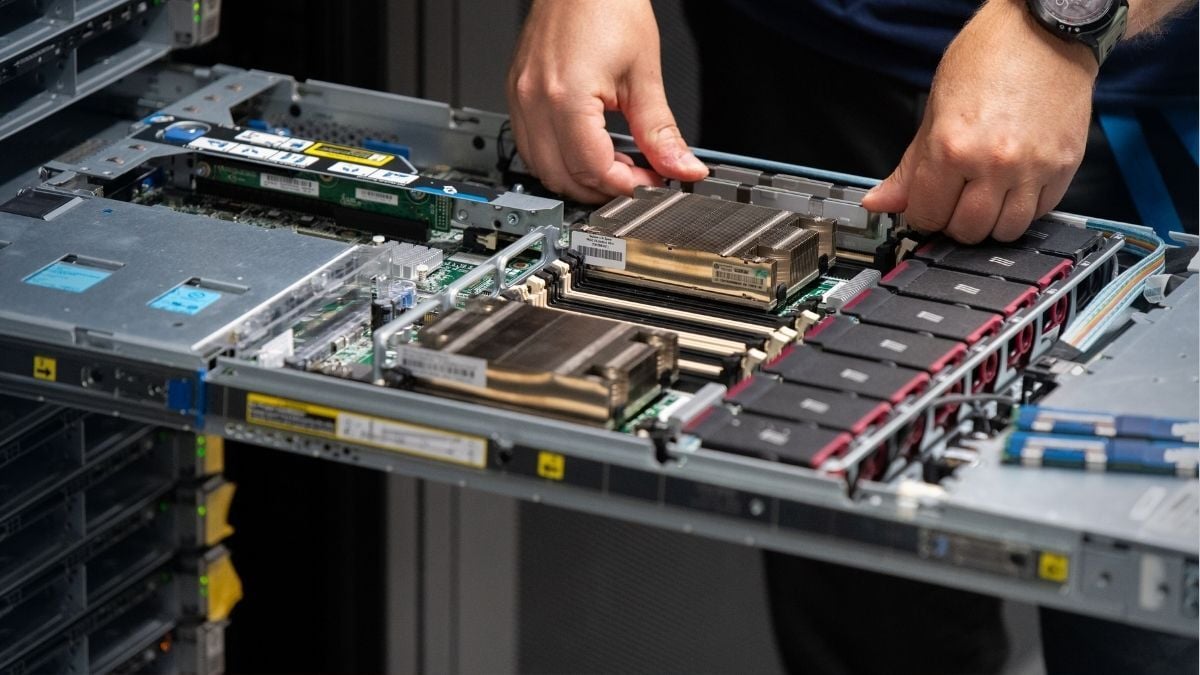
At its core, a dedicated server is "bare metal" infrastructure. When you deploy a dedicated server, you are not renting a partition of a machine; you are renting the physical chassis, the processors, the memory modules, and the storage drives located in a Tier III data center.
The primary advantage is the elimination of abstraction layers. In cloud environments, the hypervisor (the management software) consumes a portion of the CPU and memory to manage the virtual machines. In a dedicated environment, that "virtualization tax" is removed. Your applications have raw, direct access to the hardware, which is essential for high-frequency trading, massive database indexing, and real-time video encoding where even a microsecond of software overhead causes bottlenecks.
Dedicated server hosting provides:
-
Raw Performance: Direct access to hardware means no "virtualization overhead," which can typically sap 5-10% of a CPU's performance.
-
Predictability: Because you aren't sharing resources, you eliminate "noisy neighbor" issues. Your performance at 3:00 AM will be identical to your performance at 3:00 PM during a traffic peak.
-
Full Hardware Control: You choose the specific CPU (Intel Xeon vs. AMD EPYC), the storage type (NVMe, SSD, or HDD), and the RAM configuration.

Shared Hosting as the Opposite
Shared hosting is the most basic form of web hosting. In this architecture, a single physical server hosts hundreds or even thousands of separate accounts simultaneously. All users share the same pool of CPU power, RAM, and—most importantly—the same IP address and network bandwidth.
While shared hosting is an effective starting point for low-traffic personal sites or small portfolios, it is built on a model of resource contention. Because the provider over-allocates the server’s capacity assuming most users won't use it all at once, your application’s performance is entirely dependent on the aggregate load of every other user on that machine. For a scaling business, this lack of resource guarantees makes it an unreliable foundation for production-ready applications.
Dedicated Server Hosting vs Shared Hosting
The choice between shared and dedicated hosting often comes down to the requirement for resource isolation and administrative autonomy. While shared hosting is budget-friendly, it lacks the enterprise-grade stability needed for professional scaling:
|
Feature |
Shared Hosting |
Dedicated Server Hosting |
|
Resources |
Shared pool of CPU/RAM |
100% Private, reserved hardware |
|
Performance |
Variable and limited |
Consistently high; raw bare metal |
|
Security |
Basic software isolation |
Enterprise-grade physical isolation |
|
Customization |
Limited to provider’s stack |
Full root access / Custom Kernel |
|
Management |
Managed by provider |
Managed or Unmanaged (Your choice) |
In shared hosting, the provider manages the server, the security, and the updates. In a dedicated environment, you have Full Root Access. This means you can optimize the server at the kernel level, install specialized security firewalls, and run complex software stacks like Kubernetes or custom AI training models that simply won't run on shared platforms.
Furthermore, dedicated servers offer physical security. In shared hosting, a vulnerability in a neighbor’s CMS could lead to a cross-site scripting attack. With dedicated hosting, you are physically isolated, creating a significantly higher barrier for attackers.
Other Forms of Dedicated Hosting
The term "dedicated" is frequently used in marketing, but it is important to distinguish between purely physical hardware and virtualized dedicated resources.
Dedicated Instances
A Dedicated Instance is a virtual machine (VM) that runs on hardware dedicated to a single customer. While this provides physical isolation at the host level, you are still running on a hypervisor. This is often used for compliance reasons (e.g., ensuring your data isn't on the same disk as another company).
Virtual Dedicated Server (VDS)
A VDS is a middle ground. It uses virtualization to carve a physical server into smaller parts, but unlike standard VPS hosting, the resources (CPU cores and RAM) are strictly reserved and not "over-provisioned." However, it still cannot match the disk I/O or networking throughput of a true Bare Metal dedicated server.
Cost Factors Associated with Dedicated Server Hosting
The pricing of dedicated hosting is driven by the quality and performance of the physical components. Unlike the cloud, where you pay for "perceived" value, dedicated hosting costs are rooted in tangible hardware:
-
Processor (CPU) Selection: High-core-count processors like AMD EPYC or Intel Xeon Gold are the primary cost drivers.
-
Memory (RAM): The jump from 64GB to 512GB of DDR5 RAM impacts the monthly lease significantly.
-
Storage Type: NVMe (Non-Volatile Memory Express) drives offer up to 25x the speed of traditional HDDs but carry a higher price point.
-
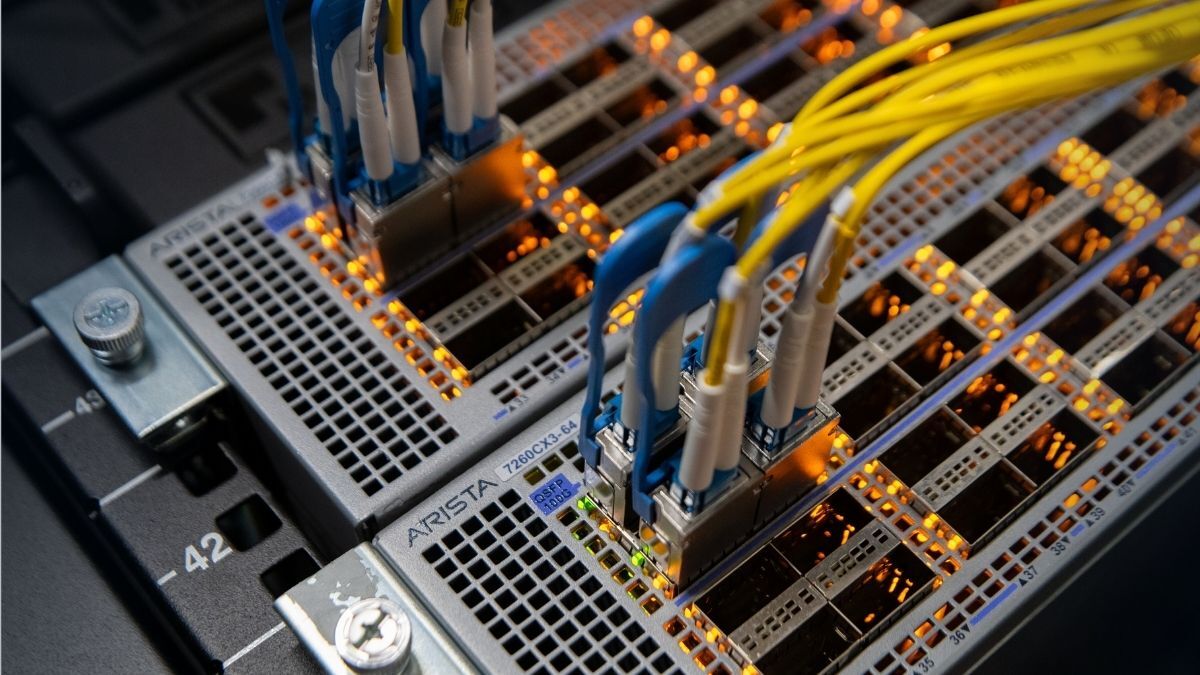
Network Throughput: The cost of a 10Gbps unmetered port is a reflection of the premium "pipe" and the quality of the IP transit (the global networks your data travels through).
Client Case Study: The High Cost of the Cloud
To understand the financial impact, let’s look at the cost structure of a mid-sized deployment of one of our CDN client: 40 Nodes, 128GB RAM, High-Speed NVMe Storage, and a 10Gbps Uplink.
|
Expense Category |
Public Cloud |
NovoServe |
3-Year Savings |
|
Compute/RAM |
$540,000 / year |
$145,000 / year |
$1,185,000 |
|
Networking (Egress) |
$900,000 / year |
$15,000 / year (Unmetered) |
$2,655,000 |
|
Total 3-Year TCO |
$4,320,000 |
$480,000 |
~89% Savings |
There’s a myth that dedicated server hosting is always expensive. But when scaled effectively—and compared to cloud solutions like AWS or Microsoft Azure—they can be far more affordable. Especially when your business has consistent resource demands, dedicated servers become the clear winner on performance and price.
Take another enterprise client as an example. Their infrastructure needs include:
-
37 servers / 560 CPU cores
-
12TB RAM / 322TB Total Storage
-
10 Gbit internal network / 6 Gbit uplink
|
Provider |
Total Cost (3 years) |
|
AWS |
$6.9 million |
|
NovoServe Dedicated Hosting |
$1.35 million |
By choosing a dedicated server hosting solution, you realize a saving of 80% without sacrificing performance. In fact, with dedicated hardware, you get better performance because you aren't paying for the cloud provider's massive administrative overhead.
The Bandwidth Factor
Bandwidth is the "hidden killer" in cloud billing. That same client requires a 6 Gbit uplink and moves 500TB of traffic per day.
-
At AWS, the bandwidth cost alone is $800,000.
-
With NovoServe’s dedicated server hosting? Just $11,000.
That is a staggering >98% saving on egress alone. This makes dedicated hosting the only viable choice for:
-
Streaming platforms and IPTV
-
CDN and content distribution
-
Data analytics and AI workloads
-
Large-scale media hosting
Choose Dedicated Server Hosting
Dedicated server hosting is for any business that values performance, control, and financial predictability. It outperforms shared hosting and, as shown, it is significantly more cost-effective than the public cloud for high-demand use cases.
At NovoServe, we combine powerful infrastructure and global delivery with transparent pricing—helping our clients save up to 80% while scaling confidently.