.svg "novoserve-dedicated-server-provider-logo")
If you are reading this, you are likely in the market for single-tenant infrastructure.
You might have a strict compliance requirement that forbids sharing hardware with other companies. Perhaps you are dealing with legacy software licensing, like Windows Server or Oracle, that requires mapping to physical CPU cores. Or maybe you are simply tired of the cloud bandwidth costs or the cloud noisy neighbours slowing down your mission-critical database.
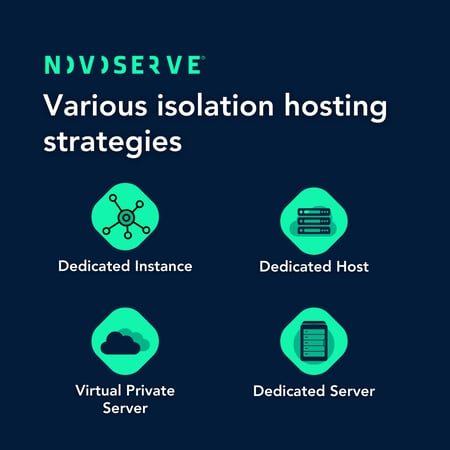
In your search within the major public cloud ecosystems, you have likely encountered two confusingly similar terms: Dedicated Host and Dedicated Instance. While they sound identical, they are distinct products with very different price tags and capabilities. To make matters more interesting, neither of them offers the raw performance potential of a true Dedicated Server (Bare Metal).
Let’s clear up the confusion so you can decide which isolation layer fits your workload.
What is a Cloud Dedicated Host?
A Dedicated Host is the closest you can get to a physical server within a hyperscale cloud environment. When you book a Dedicated Host, you are reserving an entire physical server exclusively for your use.
The primary advantage here is visibility and control. Unlike standard cloud VMs, you get full insight into the physical server’s sockets and cores, often seeing the specific Host ID. This visibility allows you to control exactly where your instances land. Crucially, this is usually the only cloud option that supports BYOL (Bring Your Own License). If you have existing per-socket or per-core software licenses, this model allows you to use them in the cloud, potentially saving a fortune on fees.
However, these benefits come with significant downsides. First, the cost is substantial; you pay for the entire server whether you use 1% or 100% of its capacity. Second, despite being "dedicated," you are usually still running on top of the cloud provider’s virtualization layer. You are paying for the hardware, but you are still losing some performance to the hypervisor overhead.
What is a Cloud Dedicated Instance?
A Dedicated Instance is slightly more abstract. You are still buying a Virtual Machine (VM), and the cloud provider guarantees that this VM will run on hardware that is physically dedicated to you. No other customer’s data will touch that machine.
This option is ideal for security and compliance. You get the single-tenant guarantee required for standards like HIPAA or PCI-DSS without needing to manage a whole server. It effectively acts just like a regular cloud instance, keeping the management side simple.
The trade-off is a lack of control. You generally cannot tell the cloud provider which specific server to use. If you stop and restart an instance, it might move to a completely different physical machine. Because you lack visibility into physical sockets, you often cannot use your own hardware-bound licenses. Furthermore, you pay a significant hourly surcharge over standard instances just for the promise of isolation.
The True “Dedicated” Server
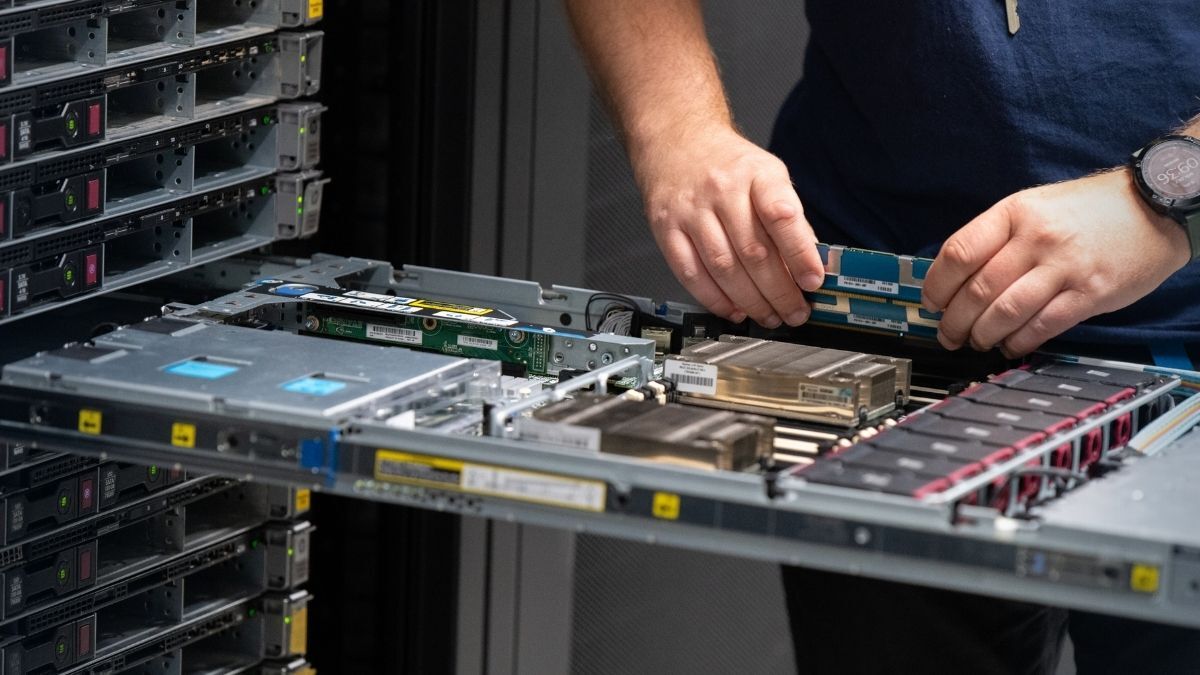
A Dedicated Server—often called Bare Metal Server—is a physical machine with zero virtualization layer. Unlike the "Dedicated Host" in the cloud, there is no hypervisor eating up your CPU cycles or RAM. You have root access to the metal itself.
The performance difference is immediately noticeable. Without a hypervisor, 100% of the hardware’s power goes to your application, which is critical for high-bandwidth workloads like streaming, AdTech, or AI.
From a cost perspective, Cloud Dedicated Hosts often carry a massive markup for the "convenience" of the cloud ecosystem. A NovoServe bare metal server typically offers significantly more RAM, storage, and bandwidth for a fraction of that monthly cost. You aren't just isolated by policy; you are isolated by physics.
Which Dedicated Solution Fits?
Here is a quick breakdown to help you visualize the differences across the three options.
|
Feature |
Dedicated Instance |
Dedicated Host |
Dedicated Server |
|
Isolation Level |
Virtual (Single Tenant Hardware) |
Physical Server (Virtualization Layer) |
Physical Server (Native/Raw) |
|
Performance |
Good (Hypervisor Overhead) |
Good (Hypervisor Overhead) |
Best (Zero Overhead) |
|
Control |
Low (Automatic Placement) |
High (Manual Placement) |
Full (Root Access) |
|
BYOL Support |
Generally No |
Yes |
Yes |
|
Scaling |
Horizontal (Cloud Auto-scale) |
Manual/Scripted |
Vertical or Cluster |
|
Network |
Metered (Expensive Egress) |
Metered (Expensive Egress) |
Unmetered (Low Cost) |
|
Ideal For |
Compliance on small workloads |
Corporate Licensing (Windows/Oracle) |
High-performance applications |
If you require "isolation" solely for a small, fluctuating workload, a Dedicated Instance offers a convenient middle ground. If you are locked into the cloud ecosystem and strictly need to use your own Windows licenses, a Dedicated Host is likely your only path there.
But, if your goal is maximum performance at the best price, neither cloud option can beat a Dedicated Server. With NovoServe, you get the dedicated hardware you were looking for - without the cloud tax or the hypervisor overhead, full control on compute power.
💬 Are you hesitating between Dedicated Host and Dedicated Server? Why not just live chat with us and let us help you find the best solution.