.svg "novoserve-dedicated-server-provider-logo")
TL;DR: to run AI models locally, the primary hardware constraint is GPU memory (VRAM). While training AI requires multi-billion dollar datacenters, local inference relies strictly on fitting model weights and the Key-Value (KV) cache within available VRAM. A single GPU dedicated server featuring the Blackwell RTX PRO 6000 provides the necessary memory and compute for frontier-level offline inference.
When enterprises transition from cloud APIs to sovereign AI infrastructure, the first engineering hurdle is hardware sizing. The exact amount of GPU memory you need to run AI locally is dictated entirely by the parameter count of your chosen model and your desired context window. You cannot swap standard system RAM for VRAM without crippling generation speeds due to extreme PCIe bandwidth bottlenecks. To maintain real-time token streaming, the entire model must fit directly onto the GPU hardware.
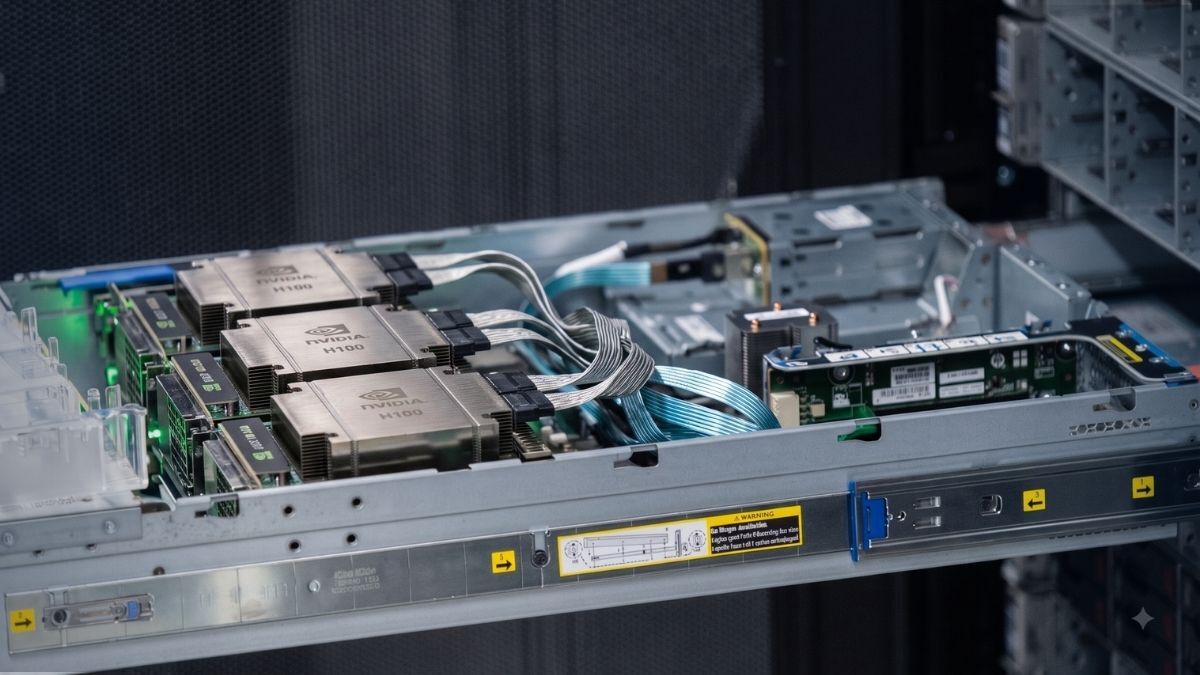
For AI models, there is an obvious separation between training AI and using a model. Training a frontier model and using a local model are fundamentally different operations requiring drastically different hardware architectures. Companies like Microsoft, Meta, Alphabet, Amazon, and OpenAI are investing 100+ billion dollars into massive data centers packed with tens of thousands of interlinked GPUs. These hyper-scale environments are required to calculate optimizer states, process gradients, and run continuous backpropagation over trillions of tokens.
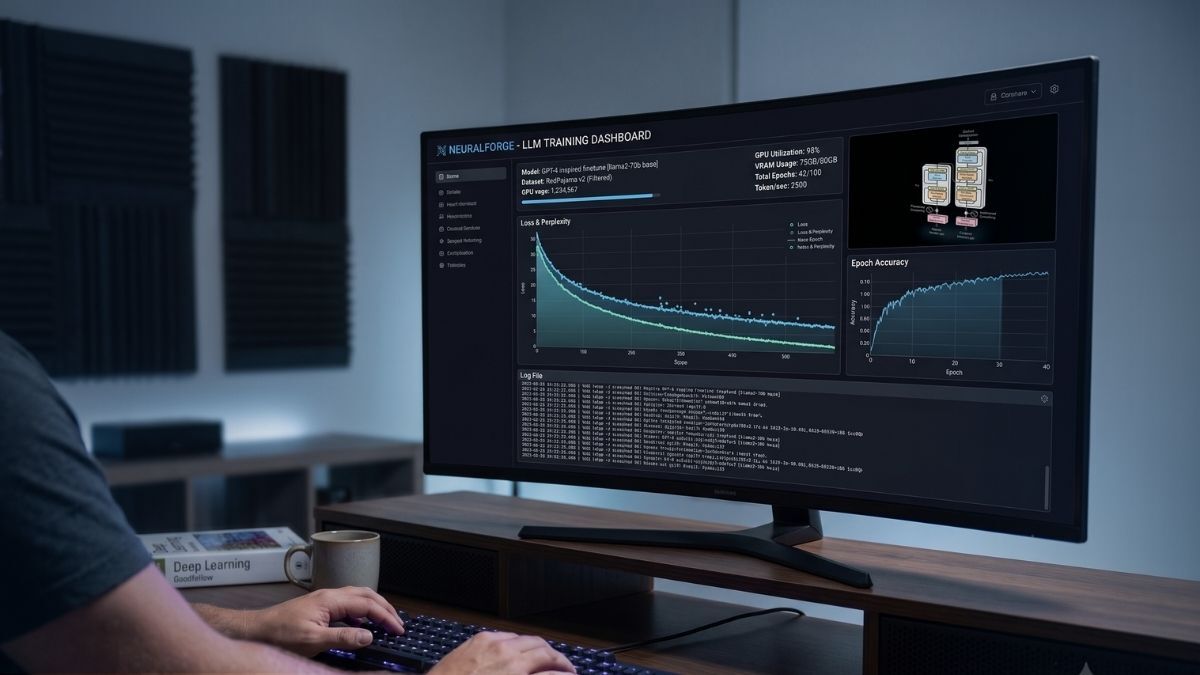
Running a model locally, known as inference, is a significantly lighter computational workload. Your server does not need to learn; it only needs to read the pre-trained weights and predict the next token. The absolute most important factor for local deployment is that the model's weights and its operational memory (the KV cache) fit securely inside your GPU memory. If you cross that VRAM boundary, performance immediately collapses.
Deploy high-density Supermicro bare metal nodes with 96GB VRAM and unmetered network connectivity.
Caculating GPU memory requirements
Calculating VRAM requirements starts with the underlying precision of the model weights. When you deploy a massive open-weight model like the 230-billion parameter Minimax-m2.1 in its native BF16 (16-bit) format, the math is unforgiving. Every single parameter requires 2 bytes of memory. Therefore, you need 450+GB of VRAM just to load the foundational weights, completely excluding the extra memory required for context processing.
Accommodating a 450+GB footprint requires linking multiple high-end GPUs together using NVLink interconnects inside a high-density bare metal server. Consumer GPUs, which max out at 24GB of VRAM, are incapable of running models of this scale natively. For finance, healthcare, and legal industries handling sensitive datasets, purchasing or renting dedicated AI servers is the only compliant path forward. These industries rely on unmetered, high-bandwidth data center operations to process proprietary data entirely offline, avoiding third-party API exposure.
What Are the Concessions and Options for GPU Memory?
Since raw BF16 inference requires extensive hardware, the AI industry relies on mathematical compression to fit powerful models onto accessible hardware. The most effective concession is quantization. By converting 16-bit weights down to 4-bit formats (such as Q4_K_M), you reduce the VRAM footprint of a model by nearly 70%. This compression allows massive neural networks to run efficiently while causing only a negligible degradation in reasoning capabilities.
If your quantized model still exceeds your available VRAM, advanced software routing offers a secondary option. Using engines like llama.cpp, administrators can implement Smart Tensor Routing. This technique keeps the model's heavily utilized attention mechanisms pinned to the fast GPU memory while intelligently offloading specific Mixture-of-Experts (MoE) layers to the CPU. While CPU offloading generally destroys throughput, pinpointing only the expert layers maintains highly usable generation speeds for models that are slightly larger than the hardware limit.
Loading a 122B Model on a Single GPU
The current sweet spot for enterprise local AI sits at the 96GB VRAM tier. When the tuning is right, you can load a frontier-class 122B parameter model onto a single GPU. Using 4-bit quantization, a 122B MoE model consumes approximately 72GB of VRAM. This specific hardware-to-model ratio leaves 24GB of high-speed memory entirely dedicated to the KV cache.
With 24GB of VRAM reserved for context, you gain an exceptionally deep and acceptable context window. Administrators can feed the model a massive 262,000-token prompt—equivalent to entire codebases, legal libraries, or financial histories—without forcing the system to offload to system RAM. Because all 49 layers of the model remain locked in VRAM, the generation speed never hits a "context cliff." Single-GPU systems running at this capacity can sustain decode speeds between 80 to 100 tokens per second, rivaling commercial cloud endpoints.
For users looking to extract maximum intelligence offline, optimizing at this 96GB boundary delivers the highest return on investment. It eliminates the complex networking, multi-GPU synchronization, and thermal overhead required by multi-card clusters. You retain flagship-level reasoning, advanced coding capabilities, and rapid document summarization inside a simplified, single-node architecture.
Get a custom hardware sizing consultation to match your specific model sizes, quantization targets, and concurrent user requirements.
Single GPU Card Dedicated Servers
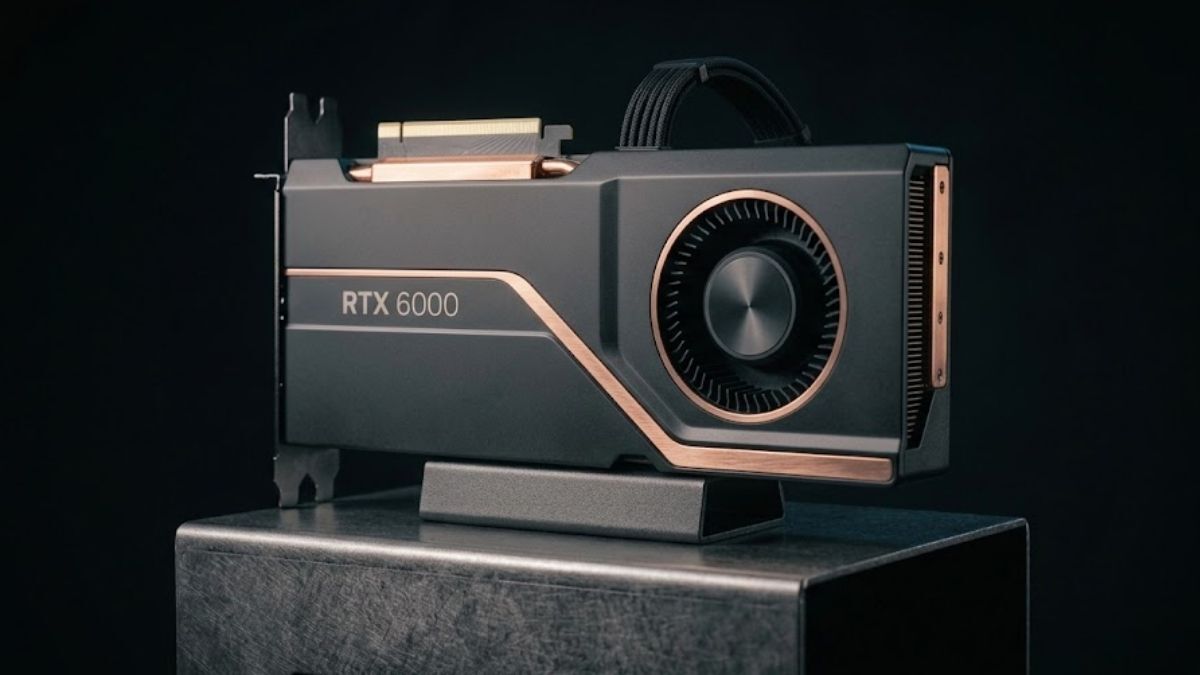
Deploying these high-parameter models requires data center environments built for sustained, 100% compute utilization. We stock a large inventory of 1 single GPU dedicated servers in our AI server webshops specifically configured for this exact workload. For teams requiring uncompromised 96GB performance, you can choose our highly popular Blackwell RTX PRO 6000 1 GPU dedicated server, built on enterprise-grade Supermicro chassis.
These bare metal setups are engineered for intensive data center operations. They feature high-bandwidth, unmetered uplinks to ensure your internal applications never bottleneck when querying the local model. The Supermicro architecture guarantees the massive cooling and stable power delivery required when running continuous batch inference on a Blackwell GPU. You get the raw speed of bare metal without the overhead of maintaining the physical hardware yourself.
Scaling local AI successfully means matching your parameter ambition with exact hardware specifications. To view in-depth performance benchmarks, optimal routing flags, and exact context scaling charts for the RTX PRO 6000, you can refer more to this article on LocalLLM.in. Understanding the exact VRAM mathematics prevents costly procurement errors and ensures your sovereign AI runs at peak efficiency.