.svg "novoserve-dedicated-server-provider-logo")
Selecting a dedicated GPU server requires a granular understanding of how specific hardware instructions and memory topologies align with high-performance computing (HPC) or machine learning (ML) kernels. Based on technical telemetry from our Netherlands-based infrastructure in Amsterdam and Rotterdam, it is evident that the efficiency of a deployment often hinges on the software-to-hardware abstraction layer rather than raw clock speeds alone.
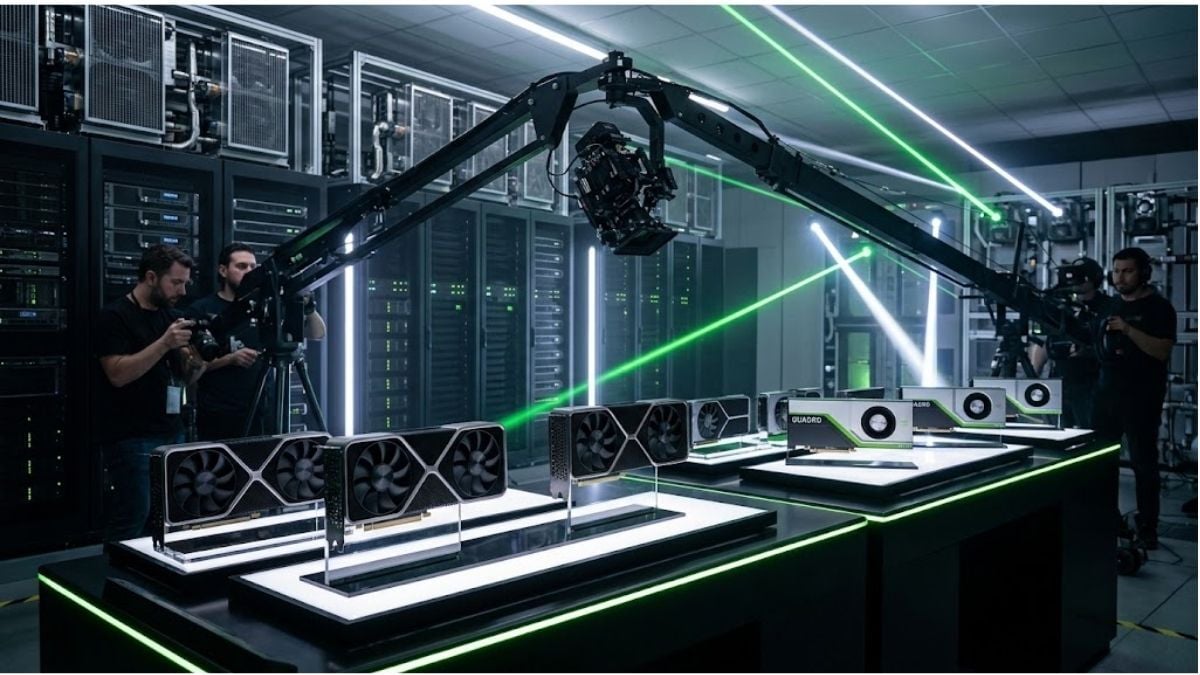
The NVIDIA GPU Ecosystem
NVIDIA’s dominance in the server market is largely a result of its proprietary CUDA (Compute Unified Device Architecture) platform. For engineers, this provides a mature, highly optimized library ecosystem that reduces the time-to-deployment for complex mathematical models. When deploying an NVIDIA GPU server, the primary advantage is the "plug-and-play" nature of the software stack. Libraries like cuDNN for deep learning and TensorRT for inference are specifically tuned to squeeze maximal throughput from the hardware.
However, the closed-source nature of NVIDIA’s stack can be a double-edged sword. It often leads to higher total cost of ownership (TCO) due to licensing and the premium placed on enterprise-grade silicon. For instance, the NVIDIA H100 80GB or the RTX 3090 24GB offer exceptional performance-per-watt, but they tie the user into a specific vendor ecosystem.
The NVIDIA V100 16GB, while an older architecture, remains a reliable choice for FP64 (double-precision) calculations, which are critical in scientific simulations and financial modeling. The primary weakness of the NVIDIA line in a multi-tenant or scaling environment is often the VRAM-to-price ratio; users frequently find themselves paying a significant premium for memory capacity compared to the competition.
The AMD Instinct GPU Architecture
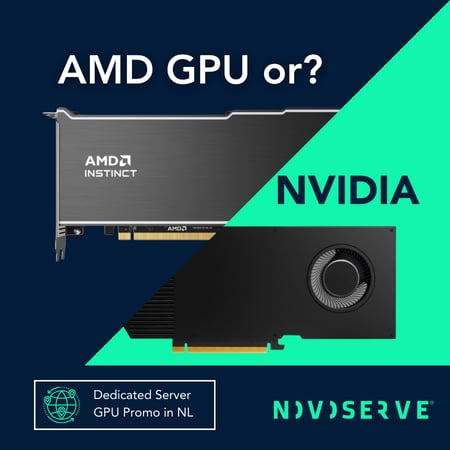
AMD has taken a different strategic path with its CDNA (Compute DNA) architecture, focusing heavily on raw memory bandwidth and open-source flexibility. The AMD instinct AI server line, particularly the MI210 64GB and MI100 32GB, challenges the market by offering significantly higher VRAM capacities. For memory-bound workloads—where the bottleneck is the speed and volume of data moving into the GPU rather than the compute cycles themselves—AMD often holds a technical edge.
The core benefit of an AMD GPU server is the ROCm (Radeon Open Compute) platform. Unlike CUDA, ROCm is open-source, allowing for deeper customization at the compiler level. This is particularly beneficial for large-scale research institutions or high-bandwidth data center operations that require transparency in their execution logs. The AMD Instinct MI50 32GB and Radeon Pro VII 16GB provide impressive FP64 performance, which is vital for heavy-duty engineering tasks. The notable weakness, however, remains the software maturity gap. While PyTorch and TensorFlow have robust ROCm support, niche libraries or legacy codebases may require significant porting efforts compared to NVIDIA’s "out-of-the-box" compatibility.
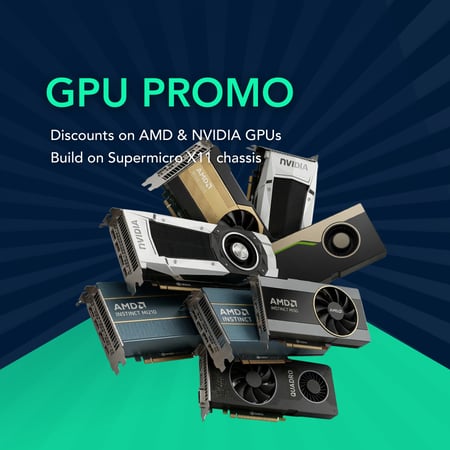
AMD & NVIDIA GPU Comparison
When comparing an NVIDIA RTX server to an AMD Instinct deployment, engineers must look at compute density. Our Supermicro and HPE ProLiant chassis allow for up to 8 GPUs per server, and the choice of card significantly impacts the thermal and power envelope of the rack.
NVIDIA cards generally offer superior Tensor Core performance, which is optimized for the matrix multiplication found in neural networks. For example, the NVIDIA RTX A4000 16GB provides a streamlined, power-efficient profile for 1U or 2U configurations. In contrast, the AMD Instinct MI210 64GB excels in large-scale inference where the model size exceeds 40GB. In such cases, a single MI210 can often replace two lower-memory NVIDIA cards, simplifying the networking overhead and reducing the complexity of multi-GPU peer-to-peer communication over the PCIe bus.
The decision between the two often comes down to the specific precision requirements of the task. While NVIDIA’s H100 leads in 8-bit floating point (FP8) efficiency for modern AI, AMD’s MI210 and MI100 provide robust performance in traditional 32-bit and 64-bit environments. This makes AMD a strong contender for fluid dynamics, weather forecasting, and structural analysis, where precision cannot be sacrificed for speed.
|
Model |
Memory |
Type |
FP32 Performance |
Best For |
|
NVIDIA H100 |
80GB |
HBM3 |
67 TFLOPS |
Transformer models |
|
AMD MI210 |
64GB |
HBM2e |
22.6 TFLOPS |
Memory-bound LLM |
|
NVIDIA RTX 3090 |
24GB |
GDDR6X |
35.6 TFLOPS |
Local Prototyping |
|
AMD MI50 |
32GB |
HBM2 |
6.7 TFLOPS |
High-throughput Inference |
|
NVIDIA V100 |
16GB |
HBM2 |
14.1 TFLOPS |
Scientific HPC |
GPU Deployment Strategy
A critical factor in server lifecycle management is the ability to upgrade and scale. In our webshop, we provide the option to select both NVIDIA and AMD units within the same infrastructure if needed, though most production environments prefer homogeneity for easier driver management. Our Supermicro X11 and HPE ProLiant nodes are designed with modularity in mind, allowing for future upgrades to CPU, RAM, or storage without replacing the entire GPU cluster.
For those looking to initiate a pilot project or scale an existing inference cluster, we are currently offering a Starter GPU Server Promo that highlights the price-to-performance parity between these two giants. You can deploy a dedicated Supermicro X11 GPU server starting from 249 euros. At this entry point, you can choose between an NVIDIA V100 16GB or an AMD Instinct MI50 32GB. The V100 is the logical choice for those requiring immediate compatibility with specialized CUDA-based software, while the MI50, with its 32GB of HBM2 memory, offers double the VRAM, making it the more capable option for memory-intensive datasets at the same price.
🎉 Our European nodes are available for immediate GPU Server deployment. Whether your priority is the established ecosystem of an NVIDIA AI server or the high-memory throughput of an AMD Instinct AI server, our bare metal configurations provide the raw, unmetered power necessary for 2026's most demanding computational tasks.