.svg "novoserve-dedicated-server-provider-logo")
Assessing direct water consumption
Water usage remains the primary environmental metric where data centers face intense public scrutiny. Compiling the latest environmental data reveals a stark contrast in resource allocation. A typical 150-acre golf course in the United States consumes approximately 200 million gallons of water annually to maintain irrigation. The United States operates over 15,000 golf courses nationwide. This recreational sector demands over 3 trillion gallons of water every single year.
In contrast, US data centers consumed 17.4 billion gallons of water directly in 2023. The entire digital infrastructure backbone of the country uses roughly 170 times less direct water than the golf industry. Most modern air-cooled data center facilities operate with near-zero direct water consumption.
In the Netherlands, precision water management helps local golf courses reduce their footprint, but land-heavy recreational irrigation still requires continuous resource intake. The Dutch data center sector utilizes just 1.0 million cubic meters of tap water annually, equating to exactly 0.083% of the nation's total tap water usage. Concentrating IT equipment in centralized facilities makes industrial cooling significantly more efficient than operating dispersed legacy server rooms.
Energy footprint and indirect resource usage
Comprehensive sustainability conversations must measure the indirect water footprint tied to energy grids. Traditional fossil-fuel power generation consumes massive amounts of water to produce electricity. If a data center relies on a standard municipal power grid, its indirect water footprint increases significantly.
Data centers in the Netherlands consume 3.7 TWh of electricity, representing 3.3% of the nation's total electricity. Because the sector is fully electrified, it accounts for a mere 0.44% of the country's total energy consumption. Crucially, the Dutch data center industry leads the world in renewable adoption, with 99% of its energy sourced sustainably.
NovoServe actively eliminates this indirect resource consumption by leveraging renewable energy sources and efficient cooling technologies. Our partner datacenters in the Netherlands and the US prioritize green energy initiatives and operate on 100% certified green energy. Removing fossil-fuel reliance from the supply chain renders the infrastructure carbon-neutral and severs the link between compute power and indirect grid water waste.
Land utilization and physical density
Spatial efficiency serves as a critical sustainability benchmark. Golf courses require vast, single-use tracts of land, continuously treated with synthetic fertilizers and herbicides. A single course averages 150 acres, occupying premium real estate that could otherwise support agricultural yield or utility-scale solar farms.
Data centers operate with extreme physical and spatial density. In the Netherlands, the entire data center sector occupies only 239 hectares. This represents exactly 0.3% of the total area of Dutch industrial sites. This tiny physical footprint actively powers the digital economy of the entire nation, hosting cloud services for 90% of local businesses.
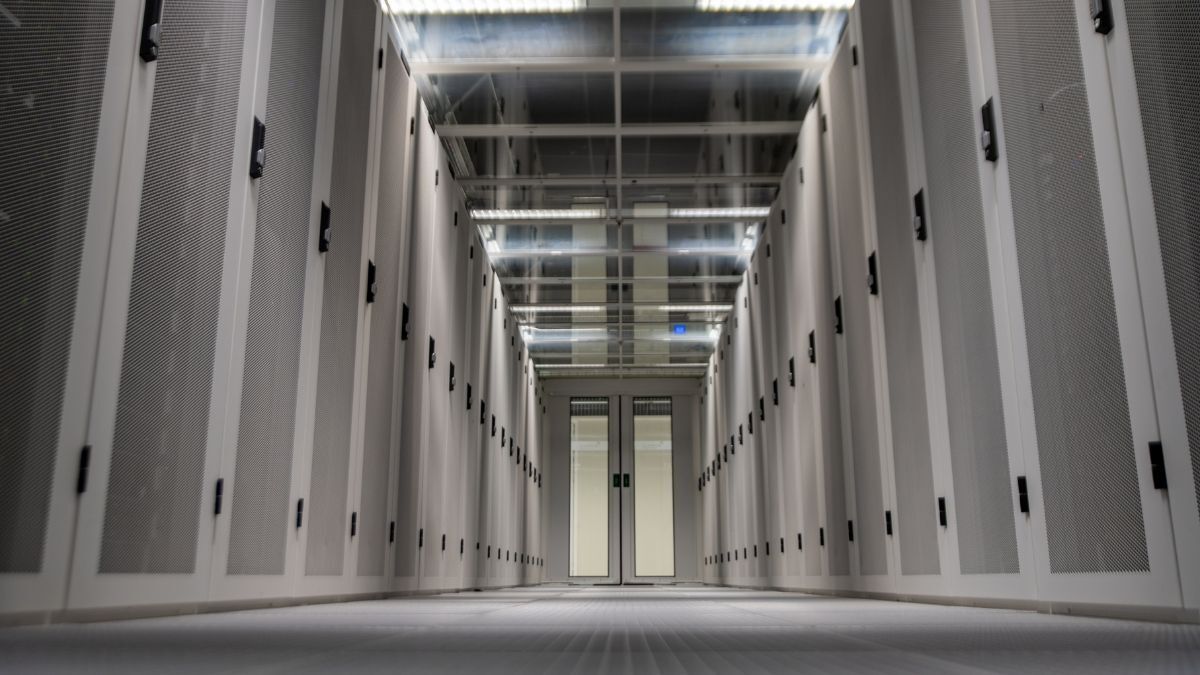
At NovoServe, we manage over 7,000 dedicated servers across more than 10 Points of Presence in the Netherlands, Denmark, and the US. We explicitly partnered up with Tier III data centers to ensure the optimal performance, security, and sustainability for our customers. Our data centers in Amsterdam, Rotterdam, Copenhagen, and New York maximize compute capacity per square meter, delivering global network connectivity without sprawling land degradation.
Economic output per resource unit
Sustainability fundamentally measures resource efficiency against value creation. Data centers severely outpace golf courses in economic productivity per gallon of water and hectare of land consumed. The digital infrastructure sector serves as the foundation for global logistics, healthcare systems, financial markets, and intensive artificial intelligence workloads.
Golf courses serve a strictly localized, recreational purpose. The disparity in economic value generated per unit of natural resource is staggering. Bare metal infrastructure enables massive global scale. When businesses transition from on-premise hardware to centralized data centers, they leverage economies of scale that slash overall carbon emissions. NovoServe provides the raw, powerful bare metal that ensures your high-bandwidth applications scale efficiently and sustainably.