.svg "novoserve-dedicated-server-provider-logo")
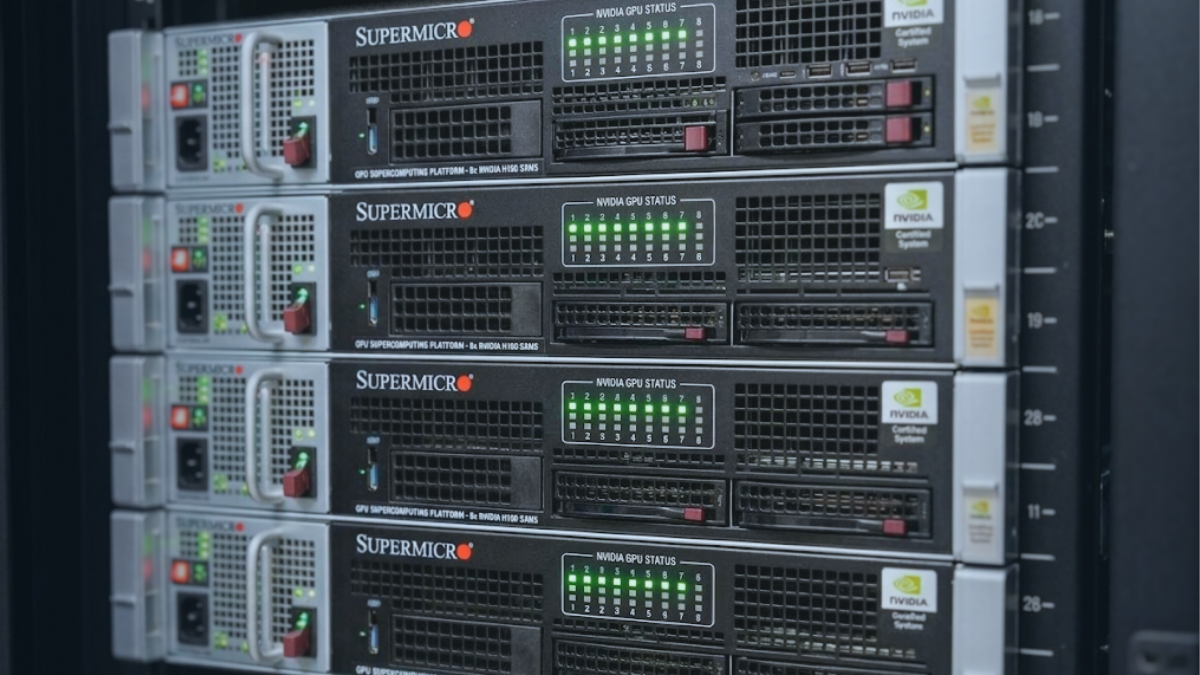
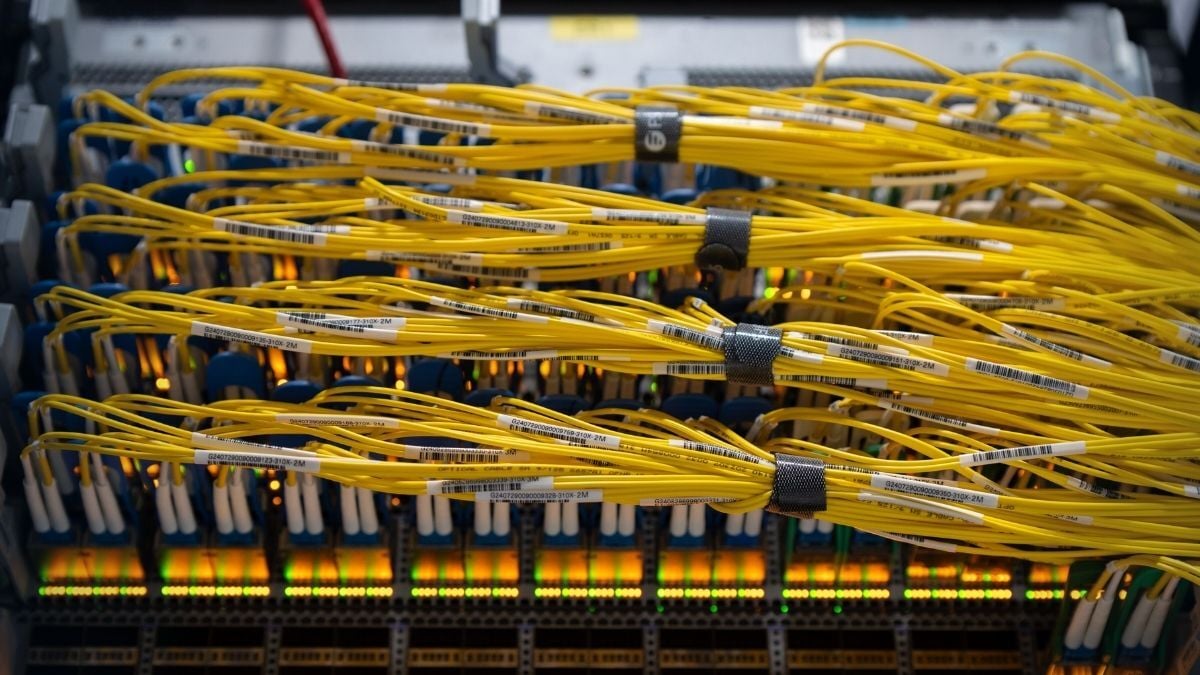
Enterprises deploying AI naturally focus on GPUs and fast NVMe storage, yet a bare metal GPU setup with strong network connectivity is what actually delivers low-latency, sovereign execution — not raw compute alone.
Cisco's AI Impact on Wide Area Networks (2026) found that AI workloads generate up to 450% more network traffic per task than standard enterprise applications, and roughly 70% of that surge comes from inference, not training. All the processing power in the world doesn't help if the data pipeline can't feed your GPUs fast enough.
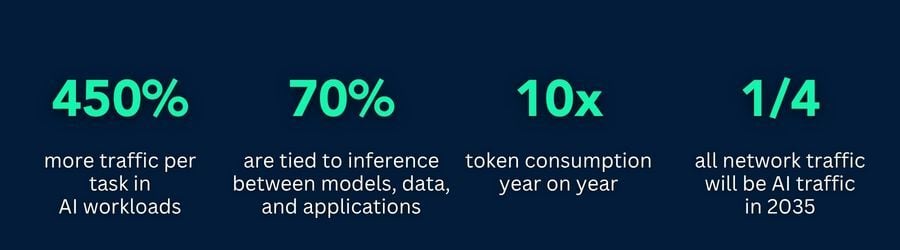
Token consumption is also growing roughly tenfold year over year across enterprise environments. Larger context windows and multi-modal payloads mean bigger packets moving through the network. Without matching throughput, you just end up with expensive GPUs sitting idle, waiting on data.
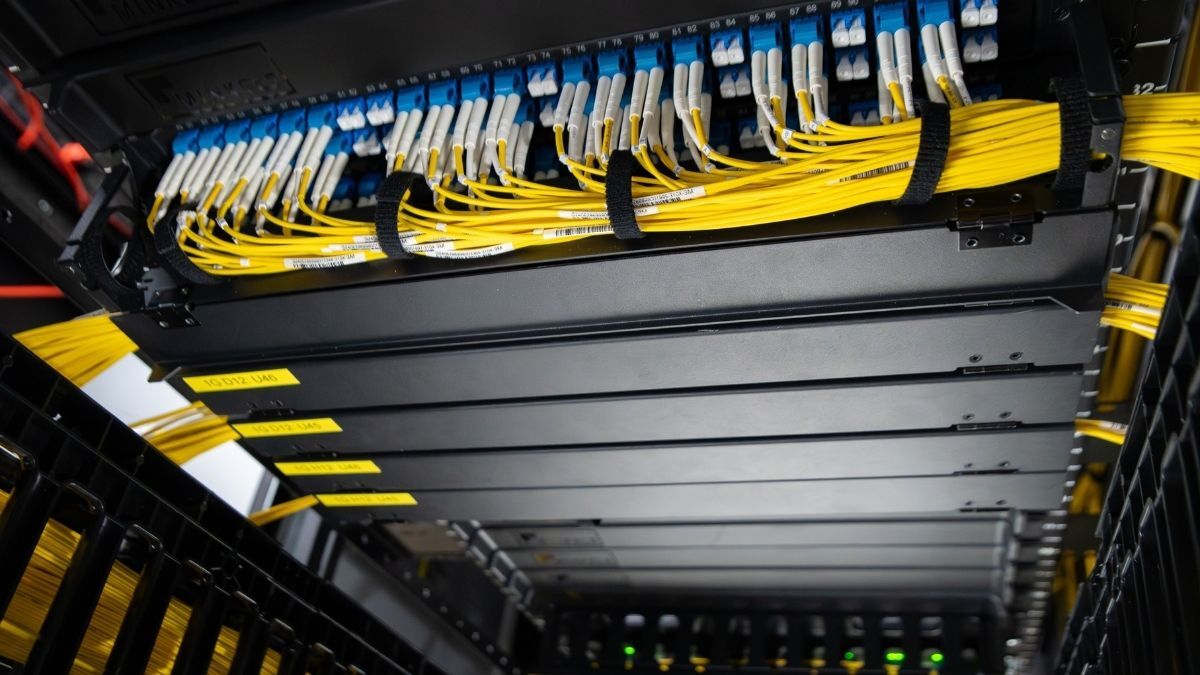
You can't fix this by upgrading a single rack anymore. Stability now depends on the throughput, routing, and latency of the transit layer itself — the network has to be built for continuous, sustained load.
Why inference is harder on infrastructure than people expect
Inference rarely happens in one contained step on a single server. RAG architectures need to query live web data, vector stores, and third-party APIs before a model can even generate a response — so a single user prompt can trigger a whole chain of network requests.
Autonomous agents make this worse. They run at software speed, constantly talking to other agents, exchanging state, executing code, coordinating across microservices. That creates heavy East-West traffic that most enterprise networks weren't built to handle.
Cisco calls this connective layer a kind of digital spinal cord — compute, data sources, and execution all wired together. When there's jitter, congestion, or packet loss anywhere along that cord, it shows up instantly across the whole chain. A microsecond of delay at the transit level becomes visible latency for the end user.
Without AI, enterprise WAN traffic was already projected to grow about 2.5x under normal digital transformation. With AI adoption factored in, that multiplier jumps to 9x. That's not a gradual shift — it's a reason to rethink infrastructure around direct transit and carrier-grade throughput now.
Network resilience means something different for AI
Most network architects lean on multi-provider redundancy, and it looks solid on paper. In practice, backup connections often share the same physical fiber, trenches, or exchange points as the primary line — so one disruption can take out both at once.
Standard web traffic can shrug off a latency spike or a retransmission. AI inference can't. It needs continuous, low-latency streaming, and high packet loss or route instability will drop active agent sessions mid-task.
By 2035, Cisco estimates AI workloads will make up roughly a quarter of all enterprise network traffic worldwide. Getting ahead of that means moving away from oversubscribed cloud routing and shared public transit.
Real resilience doesn’t ask for overprovisioning. It needs clean architecture. NovoServe runs a high-capacity, premium network built specifically to avoid congestion points and packet loss during traffic spikes, so agentic workloads and inference keep predictable, low-latency connectivity even under heavy concurrent load.
Data sovereignty isn't optional anymore
As AI agents handle more sensitive IP, financial data, and customer records, where that data travels matters legally, not just technically. Routing it across unverified international transit can trigger compliance issues under regional privacy law. You need to know exactly how your packets move and where your infrastructure actually sits.
Hyperscale cloud hides this behind abstraction layers and shared hypervisors. Bare metal doesn't — physically isolated hardware and dedicated NICs give your team real control over tenant isolation, encryption boundaries, and transit paths.
NovoServe is a Dutch company, Dutch-owned, hosting everything in secure Netherlands data centers — so your workloads stay under Dutch and EU privacy law by default.
Right-sizing GPU architecture for inference
Running production inference on massive multi-GPU clusters is often overkill. Those clusters are built for parallel training; inference and agentic workflows need fast single-thread performance and solid memory bandwidth instead. Overprovisioning compute just raises costs without making responses any faster.
A targeted single-GPU bare metal server usually hits the right balance of memory bandwidth, compute density, and cost for production inference — no virtualization overhead, no noisy neighbors, and you can scale horizontally as demand grows.
Pair that with a premium, direct-routed network and you get compute and network working in sync — low edge latency, fast token delivery.