.svg "novoserve-dedicated-server-provider-logo")
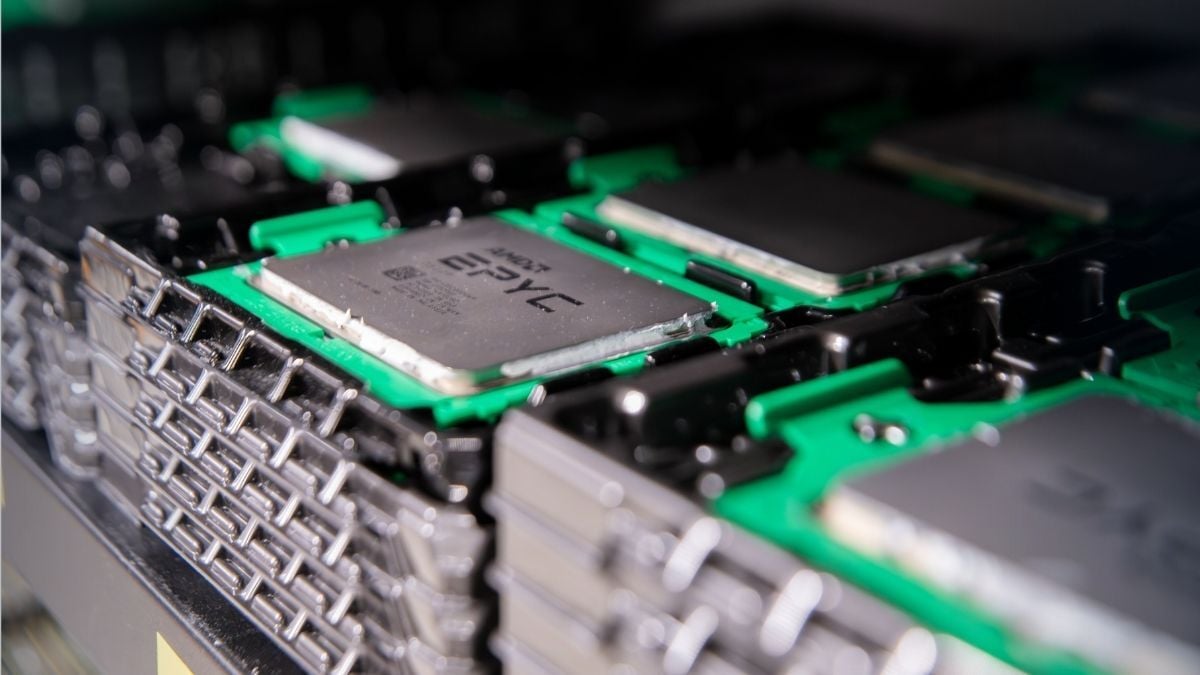
If you are training complex machine learning models, hosting dense virtual environments, or processing huge amounts of real-time data, your infrastructure has a speed limit. Usually, that limit is the silicon itself. Legacy processors often struggle to balance core count with memory bandwidth, creating bottlenecks just when you need performance the most. The AMD EPYC processor was designed specifically to remove that ceiling.
AMD’s EPYC server CPU line has earned a reputation for shattering performance records and redefining data center economics. At NovoServe, we have seen firsthand how these chips transform business operations. From the proven 7000 series (Rome and Milan) to the latest, industry-leading 9000 generation (Bergamo/Genoa), the AMD processor architecture is purpose-built to handle the most demanding modern workloads.
Read on if you want to know why AMD EPYC CPU became the silicon of choice for high-performance computing and a look at the specific models driving our fleet.

Inside the AMD EPYC Servers
What makes AMD EPYC processors fundamentally different from the competition? It starts with the architecture. The AMD EPYC family is based on the innovative "Zen" core architecture, which revolutionized the market by decoupling the I/O from the compute cores using a unique "chiplet" design (Infinity Architecture).
This design allows AMD server processors to deliver advantages that monolithic chips struggle to match:
- Massive Core Counts: By stitching together multiple dies, AMD achieves incredible density. With the latest 9000 generation, a single AMD EPYC server CPU can house up to 128 cores (256 threads), consolidating what used to be a full rack of servers into a single unit.
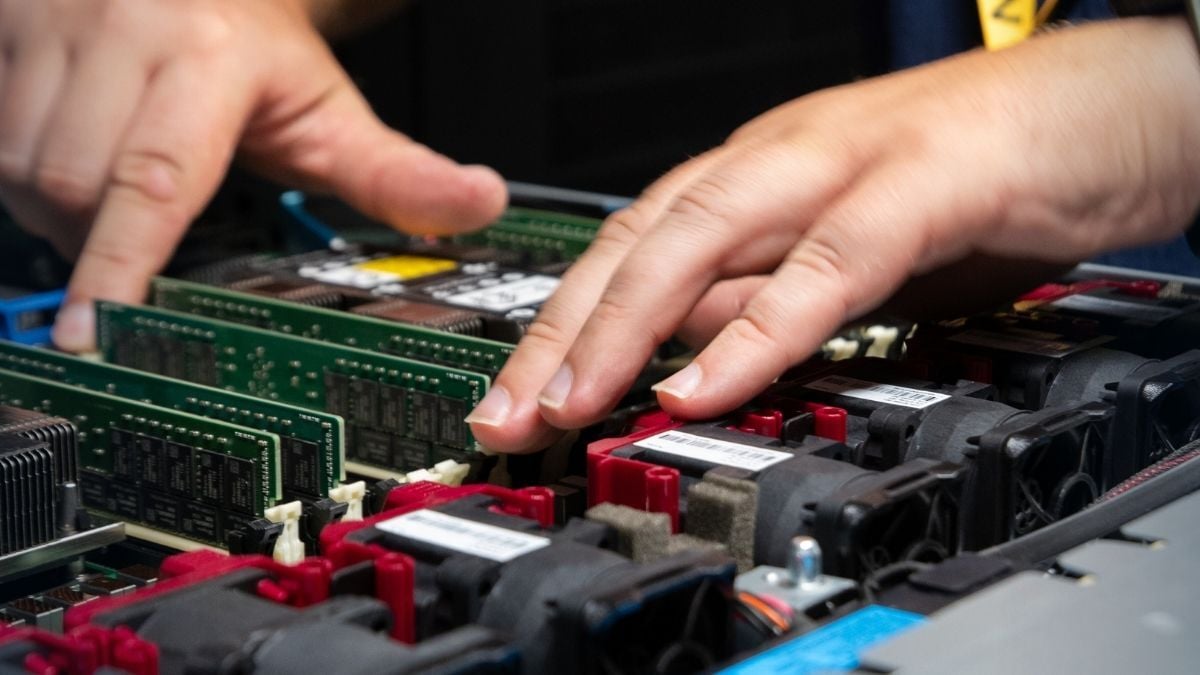
- High Memory Bandwidth: The architecture supports 8 to 12 channels of DDR4 or DDR5 memory, ensuring that the high core counts aren't starved of data. This is critical for bandwidth-hungry applications like Computational Fluid Dynamics (CFD) and in-memory databases.
- PCIe Supremacy: An abundance of PCIe lanes (up to 128 lanes per socket on Gen4/Gen5) makes the AMD CPU ideal for connecting NVMe storage arrays and AI accelerators (GPUs) without requiring expensive PCIe switches.
This combination of extreme core density, memory throughput, and I/O flexibility makes AMD EPYC server processors a smart long-term investment for scalable, future-proof infrastructure.
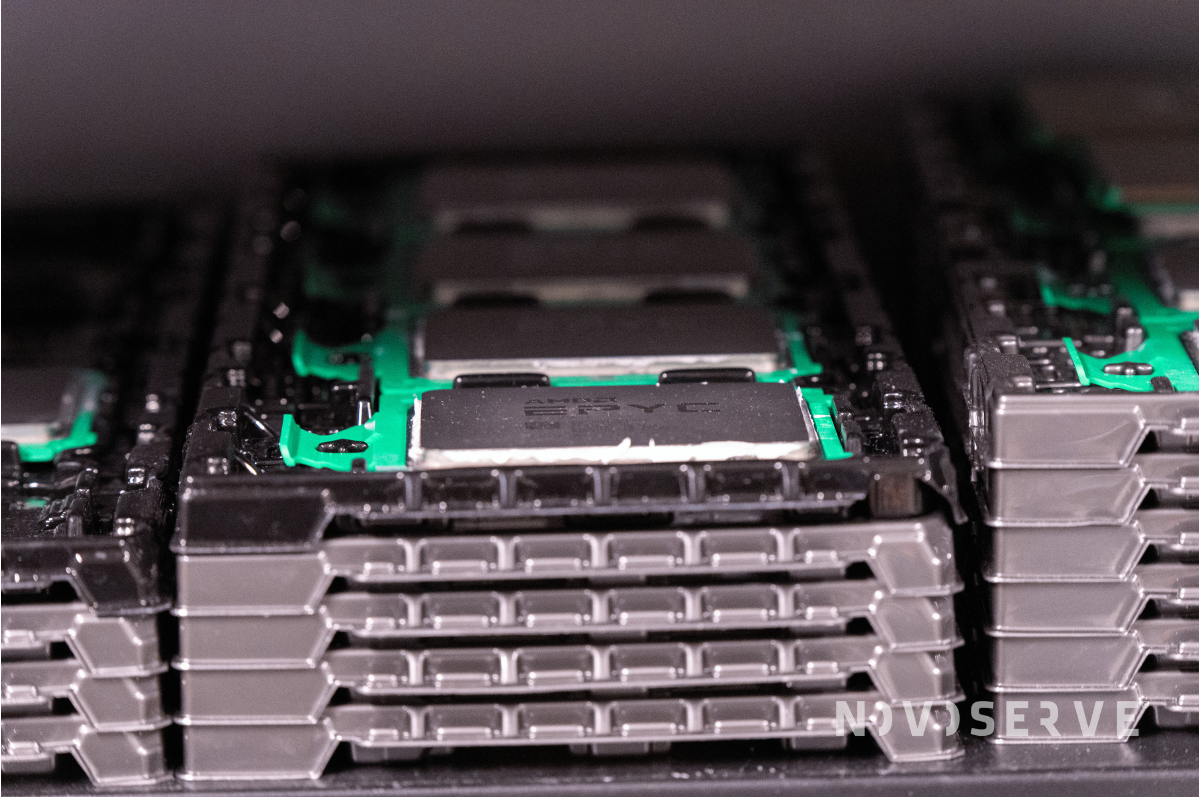
Our AMD EPYC CPU Lineup
Not every workload requires the same engine. At NovoServe, we curate our AMD EPYC server CPU inventory to offer the right balance of frequency, core count, and cost for different use cases. Here is a breakdown of the specific processors available in our webshop:
- The Efficiency Workhorse: AMD EPYC 7302 & 7402
For businesses that need enterprise-grade reliability without the price tag of top-tier density, the 7002 "Rome" series remains a favorite.
- AMD EPYC 7302: With 16 cores and 32 threads, this processor offers a high base clock speed, making it excellent for web serving, dedicated game hosting, and standard virtualization tasks where per-core licensing costs are a factor.
- AMD EPYC 7402: Stepping up to 24 cores and 48 threads, the 7402 provides significant multi-threaded muscle for mid-sized databases and containerized applications.
- The High-Performance Mainstream: AMD EPYC 7542
The AMD EPYC 7542 sits in the sweet spot of the lineup. With 32 cores and 64 threads, it delivers serious computational power for heavy lifting. It is particularly well-suited for video transcoding and compiling large codebases, where parallel processing speeds up the workflow dramatically.
- The Density King of the 7000 Series: AMD EPYC 7742
Before the 9000 series arrived, the AMD EPYC 7742 was the undisputed king. Featuring 64 cores and 128 threads, this AMD server processor is a beast for virtualization. It allows MSPs and hosting providers to pack dozens of virtual machines (VMs) onto a single physical server, maximizing revenue per square foot of data center space.
- The Next-Gen Monster: AMD EPYC 9754 (Bergamo)
For those who need the absolute pinnacle of performance, we offer the latest AMD EPYC 9000 series. The flagship AMD EPYC 9754 boasts an incredible 128 physical cores (256 threads). Designed specifically for "cloud-native" computing, this AMD server CPU is optimized for hyperscale environments, massive container orchestration (Kubernetes), and AI inference at scale. It represents the cutting edge of what x86 architecture can achieve.
You can compare these specific CPUs and their pricing in our Europe or USA AMD server webshop.
AI & Data Science Domination
AMD EPYC isn’t just a fast chip—it is a foundational component for artificial intelligence and machine learning pipelines. While GPUs often get the glory for training, the AMD CPU acts as the conductor, managing data ingestion, preprocessing, and feeding the GPUs.
With market-leading core counts and ultra-fast interconnects, AMD EPYC server processors are exceptionally well-suited for inference models. The ability to run hundreds of threads at high speed means you can handle multiple AI inference tasks simultaneously without hitting logic bottlenecks. If your stack involves computer vision, Natural Language Processing (NLP), or deep learning, the massive throughput of an AMD processor is critical to keeping latency low.
High I/O Performance
If your focus is storage, the processor choice matters more than you might think. AMD EPYC CPUs are famous for their massive I/O capabilities.
Because an AMD EPYC processor offers significantly more PCIe lanes than many competitors (128 lanes standard), it is the natural choice for Software Defined Storage (SDS), NVMe arrays (like Ceph or ZFS), and Big Data warehousing. The chip allows for direct connection to multiple NVMe U.2 drives without requiring a switch (PLX), drastically lowering latency and eliminating bottlenecks between your data and your CPU.
The Right AMD Hardware
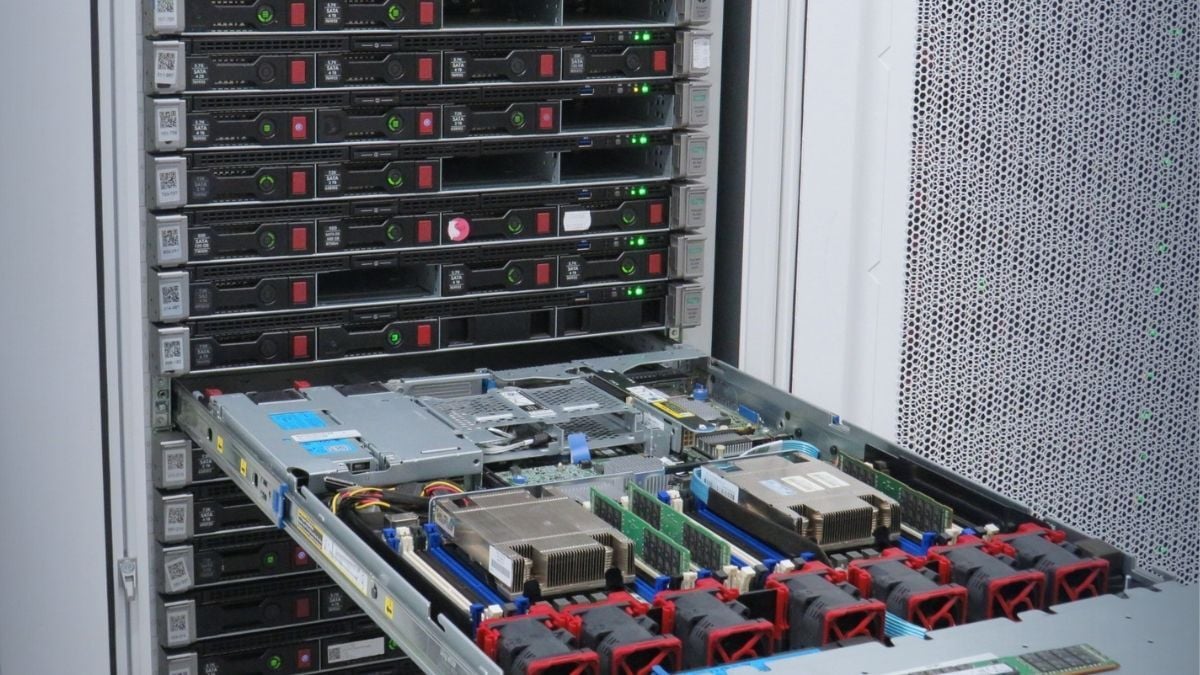
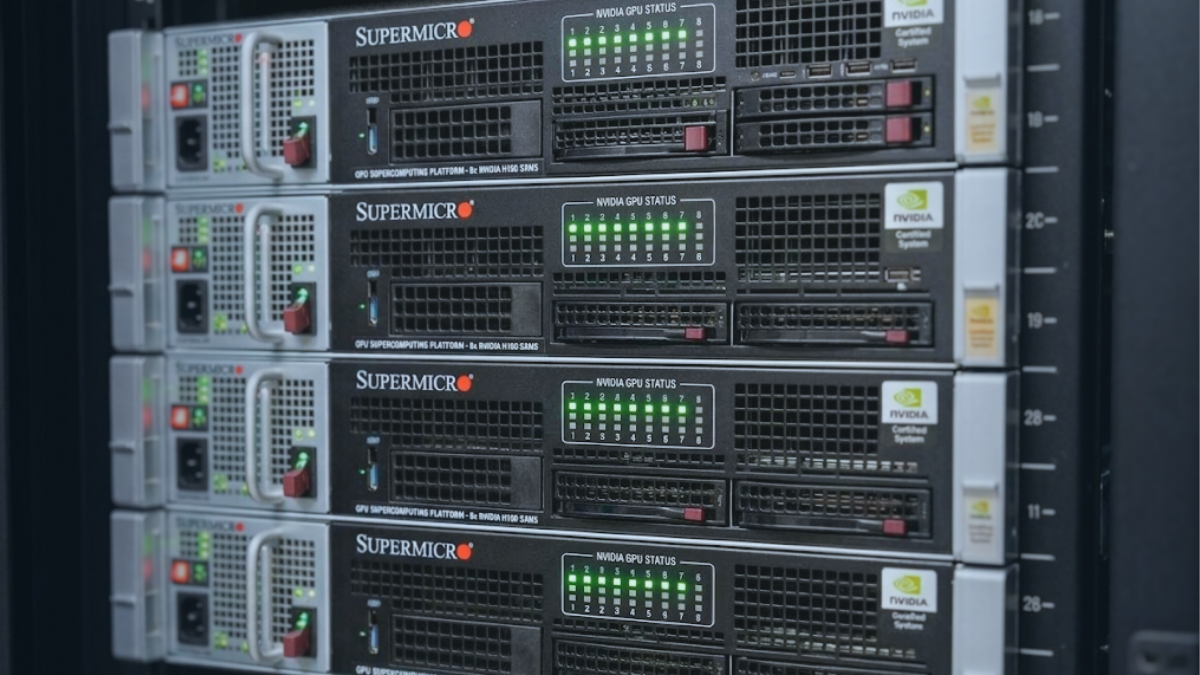
An AMD EPYC CPU can be used for any workload, but it needs the right home to perform. Whether utilizing HPE ProLiant DL325/DL385 (Gen10 & Gen11) or specialized Supermicro chassis, the goal is to unlock the full potential of the silicon.
At NovoServe, we allow you to leverage these powerful AMD server processors within a fully customized environment. Whether you need private networking, specific RAID setups, or unmetered bandwidth, we build the infrastructure around the processor's capabilities, ensuring you get the maximum ROI from your hardware.
The AMD EPYC processor has redefined what is possible in a single server chassis. By choosing this architecture, you are choosing efficiency, hardware-level security (AMD Infinity Guard), and raw computational power.
Ready to put this silicon to work? Explore our pre-configured builds featuring the full range of AMD EPYC CPUs discussed above.