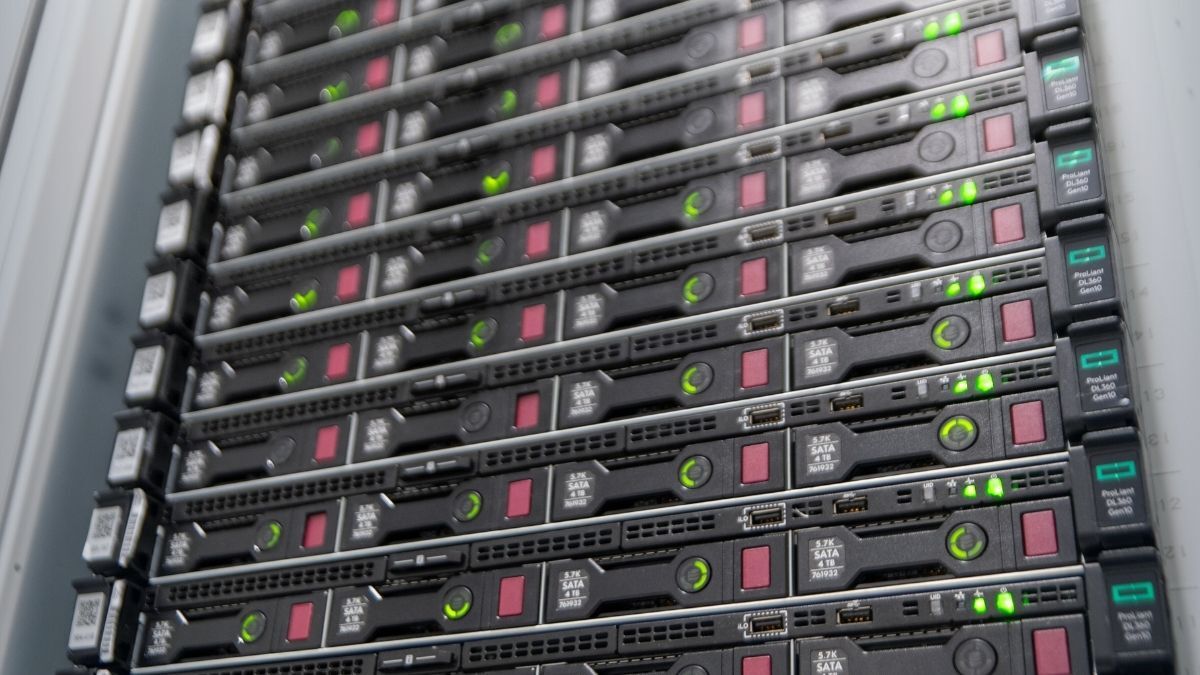
Commercial CDNs charge $400 to $7,000+ per 100 TB of egress, eating into margins for high-volume video, gaming, and SaaS platforms. Building a private CDN on bare metal servers cuts delivery costs by up to 85% while giving engineering teams full control over caching, routing, and hardware. Over the past decade of deploying edge infrastructure for streaming platforms and private networks at NovoServe, we have seen the exact same crossover point: once monthly egress passes 50 TB to 100 TB, renting someone else’s edge network becomes financially disadvantageous. It is time to build your private CDN dedicated server or deploy a hybrid CDN strategy.
What is a CDN server?
A Content Delivery Network (CDN) splits content delivery into two distinct hardware layers: origin servers and edge servers. Origin server is the central source of truth holding your master files, databases, raw video libraries, or dynamic application code. Origin servers focus on storage capacity, RAID redundancy, and compute power rather than direct end-user proximity.
A CDN edge server is a geographically distributed caching node positioned close to end users. When a user requests an asset, the edge server checks its local RAM or NVMe cache. On a cache hit, it serves the file immediately over a short network path; on a cache miss, it pulls the file from the origin once, caches it locally, and serves every subsequent regional request directly.
This separation drops Time to First Byte (TTFB), shields the origin from traffic spikes, and keeps long-haul transit costs low.
Commercial CDNs and private CDNs
Outsourcing delivery to commercial CDN providers like Akamai, Fastly, AWS CloudFront, or Cloudflare works well for small sites or teams without dedicated ops engineers. You flip a DNS switch and inherit hundreds of global Points of Presence (PoPs), managed TLS, and out-of-the-box WAF rules.
The trade-off hits hard at scale. Commercial CDNs layer multiple fees on top of raw bandwidth: regional multipliers, HTTPS request fees ($0.01 per 10,000 requests on CloudFront and Fastly), cache-lookup charges, and rigid enterprise commits. Worse, multi-tenant edge nodes give you zero visibility into disk I/O contention or cache eviction rates.
Running a private CDN on your own CDN dedicated server infrastructure puts you in charge of the entire stack. You control cache-retention policies, TLS termination, BGP routing, and raw port utilization without paying a markup on every gigabyte transferred.
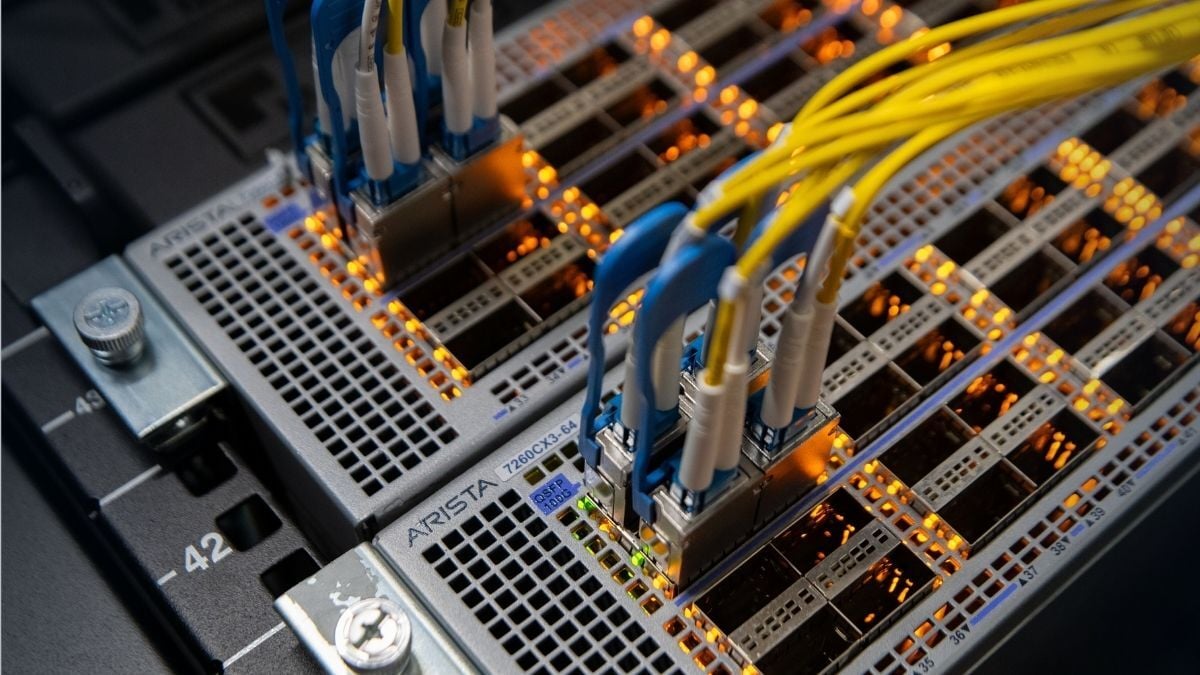
How to build a CDN server
Deploying a production-grade private CDN needs methodical engineering across five stages. Skipping capacity math or DNS failover logic will cause origin meltdowns during peak traffic.
1. Select your points of presence
Audit 90 days of your access logs before leasing a single machine. Map traffic volume by country, ASN, and peak concurrency. Most mid-market platforms discover that 85% to 90% of their bandwidth concentrates in two or three major corridors—typically in North America, Europe or Asia. Deploy edge nodes only where your traffic density justifies the hardware.
2. Size hardware for your traffic
Calculate peak egress in Gbps, not just monthly terabytes. A 10 Gbps port running at 80% utilization pushes roughly 2,600 TB per month, while a 2 Gbps port handles about 520 TB. Always build in 20% to 30% headroom for sudden traffic bursts and failover scenarios where one edge node absorbs another’s load.
3. Provision your bare metal
Edge caching workloads are bound by memory speed, disk I/O, and network interface throughput. Configure your physical machines around three core specs:
- RAM: Size RAM to hold your "hot" working set (the top 5% to 10% of assets generating 80% of requests). For busy edge nodes, 128 GB to 256 GB of ECC RAM keeps hot objects entirely in memory with microsecond read times.
- NVMe SSD storage: Use enterprise NVMe drives in RAID 0 or JBOD (since cached data is ephemeral and backed by the origin) to handle the "warm" working set. Standard SATA SSDs or spinning HDDs choke under thousands of concurrent random reads.
- Network ports: Provision dedicated 10 Gbps, 20 Gbps, or 50 Gbps uplinks with dual-port bonding (LACP) for local switch redundancy.
4. Set up origin and edge caching software
Install a lightweight Linux distribution (Debian, Ubuntu LTS, or Rocky Linux) and tune the kernel for high-throughput networking. Increase TCP buffer sizes (net.core.rmem_max, net.core.wmem_max), enable BBR congestion control (net.ipv4.tcp_congestion_control = bbr), and raise file descriptor limits (ulimit -n) to handle tens of thousands of simultaneous sockets.
Deploy your caching daemon on each edge node and configure it to pull from your origin over a persistent, keep-alive connection. Implement origin shielding—designating one mid-tier cache node in front of your origin—so multiple edge PoPs never hammer the origin simultaneously for the same uncached file.
5. Configure routing and health checks
Direct users to the nearest healthy edge node using one of two methods:
- GeoDNS (e.g., Route 53, NS1, PowerDNS): Simple to deploy and asks for no ASN or IP space. DNS resolves user queries to the closest PoP IP based on geolocation, paired with active HTTP health checks that pull dead nodes out of rotation within 30 to 60 seconds.
- BGP Anycast: Requires your own ASN and at least a /24 IPv4 block (or /48 IPv6). Every edge PoP announces the exact same IP prefix via BGP, and internet routers automatically send users to the topologically closest node with sub-second failover.
Why build your own CDN
Volume economics drive almost every migration from commercial CDNs to bare metal. At 100 TB per month, pay-as-you-go rates on AWS CloudFront hit ~$6,965 to $7,158 (before HTTPS request fees), Azure Front Door sits near $6,395, and Google Cloud CDN runs ~$5,501. Even budget commercial CDNs like Bunny Volume or BlazingCDN bill $415 to $512 per 100 TB—which scales to $2,075 to $2,560/month at 500 TB.
Compare those numbers against NovoServe’s published US bare metal traffic pricing on a dedicated uplink:
|
US Traffic Tier (NovoServe) |
Rate Limit |
Monthly Add-On Cost |
Effective Cost per GB |
|
25 TB Traffic |
2 Gbps |
Included |
$0.0000 |
|
100 TB Traffic |
2 Gbps / 5 Gbps |
$50 / $70 |
$0.0005 – $0.0007 |
|
250 TB Traffic |
5 Gbps / 10 Gbps |
$200 / $250 |
$0.0008 – $0.0010 |
|
500 TB Traffic |
5 Gbps / 10 Gbps |
$450 / $500 |
$0.0009 – $0.0010 |
|
1 Gbps Unmetered |
1 Gbps |
$80 |
~$0.00024 (at max) |
|
5 Gbps Unmetered |
5 Gbps |
$400 |
~$0.00024 (at max) |
|
10 Gbps Unmetered |
10 Gbps |
$800 |
~$0.00024 (at max) |
|
20 Gbps Unmetered |
20 Gbps |
$1,600 |
~$0.00024 (at max) |
Even after adding a physical US bare metal box starting at $70/month, pushing 500 TB of outbound traffic costs roughly $500 total. You keep the entire margin.
You also avoid paying for 300 global PoPs you barely use. If 90% of your users sit in North America and Europe, deploying edge servers in three strategic hubs—such as NovoServe’s facilities in New York (Edison, NJ), Amsterdam, and Copenhagen—covers the vast majority of your audience with low latency and zero regional surcharge multipliers. Beyond cost, owning your edge eliminates shared-tenant network congestion and lets you engineer bespoke redundancy tailored to your exact uptime SLA.
Finding the right bare metal
Your CDN is only as fast as the physical network and hardware underneath it. When evaluating a provider for a CDN dedicated server, audit four technical layers:
- Network quality and peering: Look for multi-homed Tier-1 transit (such as Arelion, Cogent, GTT, and NTT), direct peering at major exchanges like AMS-IX and NL-IX, and Private Network Interconnects (PNIs) with major eyeball networks. NovoServe backs its PoPs with a 19+ Tbps global backbone, Noction-optimized BGP routing, and standard edge DDoS protection.
- True dedicated ports: Verify that unmetered ports have no hidden Fair Use Policies (FUP) that throttle sustained throughput. For multi-server clusters, look for 95th percentile aggregated bandwidth pools so your fleet shares capacity cleanly.
- Hardware balance (NVMe + CPU): Choose bare metal over cloud VMs to avoid hypervisor overhead, CPU steal time, and throttled virtual NICs. High-core CPUs (like AMD EPYC or dual Intel Xeon) handle heavy TLS 1.3 handshakes and Brotli/Gzip compression without choking, while enterprise NVMe drives sustain high random-read IOPS.
- Caching software layer: Match your software to your workload. Varnish Cache excels at in-memory HTTP acceleration and complex VCL routing rules. NGINX (or OpenResty) is the standard workhorse for mixed static/video delivery, TLS termination, and disk-backed NVMe caching. Apache Traffic Server (ATS) is purpose-built for massive multi-terabyte disk caches and large-scale ISP/CDN deployments.