.svg "novoserve-dedicated-server-provider-logo")
The hourly cloud trap
Founders and infrastructure engineers scaling SaaS platforms hit a mathematical ceiling with on-demand cloud GPUs. Hourly platforms like Vast.ai, RunPod, and Lambda Labs optimize their pricing for transient workloads and hyperparameter sweeps. Vast.ai operates a peer-to-peer marketplace where you can rent an RTX 3090 for $0.15 per hour. RunPod provides a serverless environment heavily reliant on preemptible spot instances. The initial appeal of these hourly rates vanishes when your production inference API goes offline due to sudden instance termination.
We tracked uptime metrics across decentralized GPU marketplaces over a 90-day period. Spot instances saving teams 30% per hour frequently crashed during peak US business hours, causing cascading failures in connected applications. Furthermore, these platforms impose data egress fees that inflate monthly spend by 10% to 15%. Moving multi-terabyte datasets across regions on metered connections rapidly destroys infrastructure budgets. You cannot build a reliable enterprise AI product on borrowed compute time.
AI demands constant GPU availability
Certain AI workflows fundamentally reject temporary compute provisioning. Hosting a production LLM for customer-facing inference requires 24/7 uptime and sub-100ms response times. Computer vision pipelines processing live CCTV feeds for anomaly detection cannot tolerate spot instance preemptions. High-frequency algorithmic trading firms deploying predictive models need absolute microsecond reliability that shared infrastructure cannot provide.
Continuous fine-tuning of foundational models on proprietary datasets also demands uninterrupted duty cycles. Deep learning workloads push silicon to extreme thermal limits for weeks at a time. When training a 70B parameter model, a single node failure forces the entire cluster to restart from the last checkpoint, wasting hours of expensive compute. Predictable, dedicated hardware eliminates this operational risk entirely.
Our NVIDIA GPU inventory
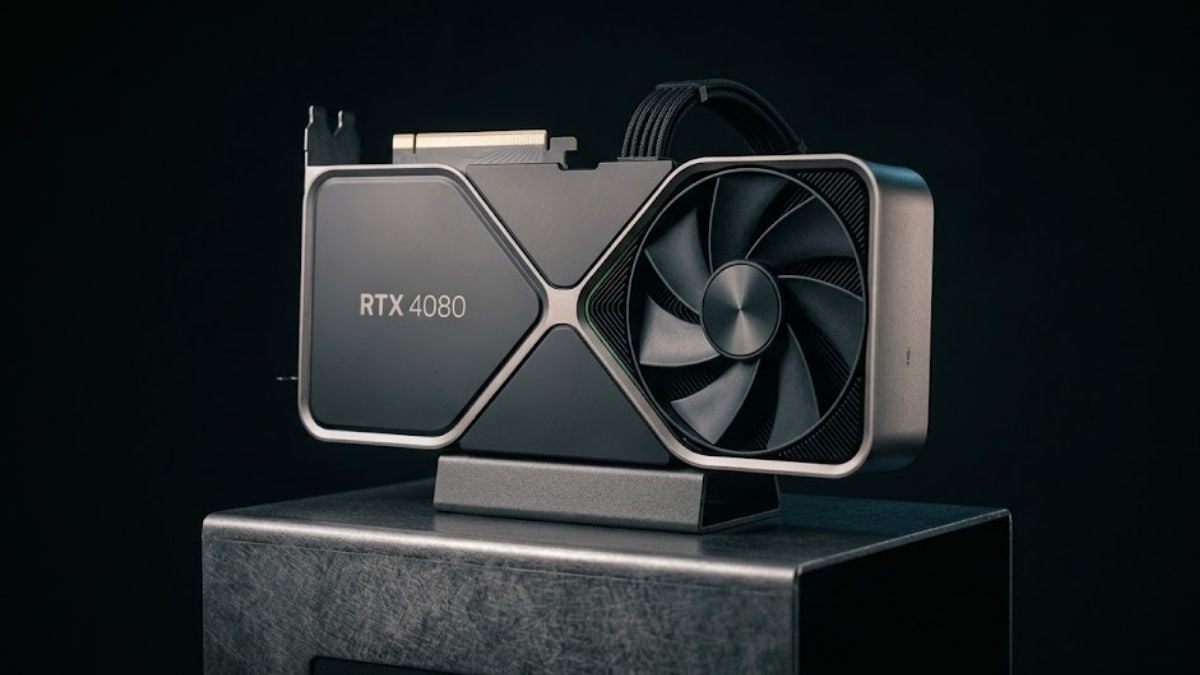
NovoServe bridges the gap between massive compute requirements and budget predictability. We maintain a diverse inventory of NVIDIA hardware ready for rapid deployment of GPU dedicated servers. For lightweight inference and testing, we deploy single NVIDIA RTX 3090, RTX A4000, and RTX A5000 instances. Mid-tier workloads benefit from the V100 (16GB) and RTX A6000.
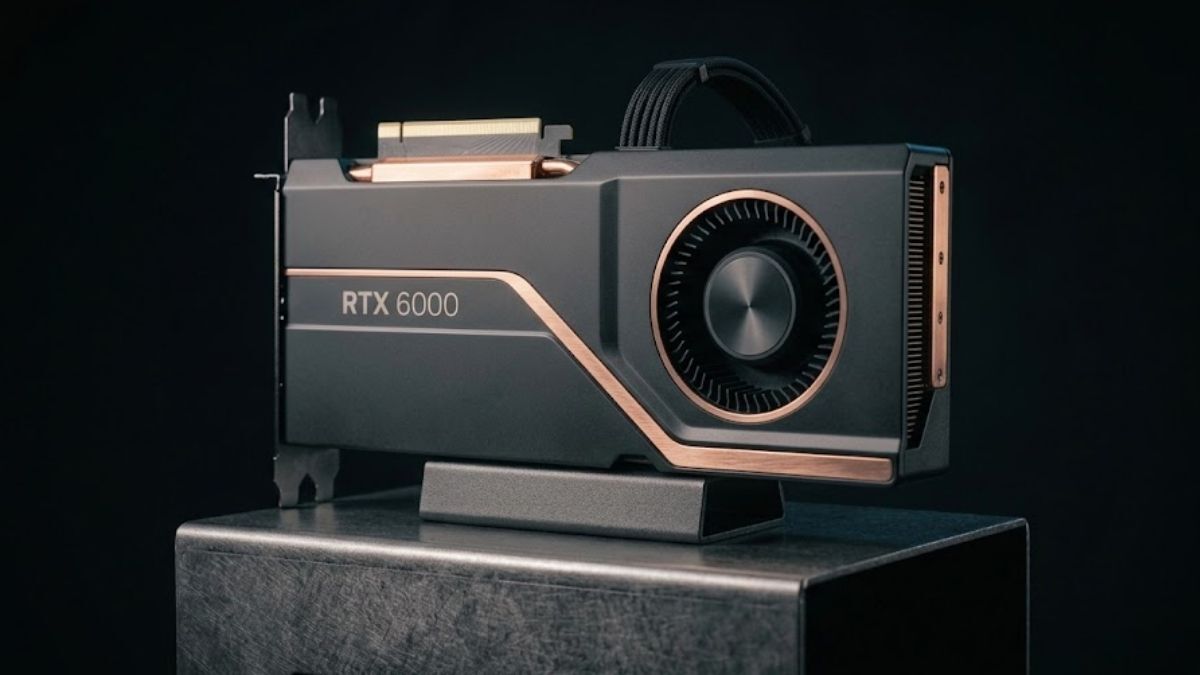
For maximum parallel processing, we assemble dense multi-GPU clusters. Teams can deploy configurations featuring 2x, 4x, or 8x NVIDIA RTX PRO 6000 (96GB) setups. For the most demanding LLM training regimens, we rack servers equipped with PCIe NVIDIA H100s. We exclusively utilize Supermicro (X11/H12/H13) and HPE ProLiant chassis engineered for superior thermal dissipation, allowing our enterprise systems to operate at 100% duty cycles indefinitely.
Bare metal accelerates token generation
Shared GPU environments suffer from latency spikes and restricted memory bandwidth. Virtualized cloud instances slice physical hardware into smaller virtual machines, introducing hypervisor overhead. Your token generation speed drops unpredictably when another tenant maxes out the underlying PCIe bus on the same host.
NovoServe provides completely isolated compute environments where you lease the entire physical machine. You retain root access and dictate the operating system, container orchestration, and drivers. Your workloads command exclusive access to the VRAM and CPU cycles. We benchmarked bare-metal deployments against shared cloud instances and recorded an 18% improvement in sustained token generation rates for LLaMA-3 deployments.
Built for massive data ingestion
Data transfer costs often rival the price of the compute itself on public clouds. Running a single H100 at standard hyperscaler rates exceeds $2,100 monthly, before adding storage and networking egress penalties. NovoServe solves this via fixed monthly pricing and unmetered network ports.
We operate a massive 19+ Tbps network backbone multihomed across premium Tier-1 carriers. You receive dedicated unmetered ports ranging from 1 Gbps to 50 Gbps. This architecture allows your team to ingest petabytes of training data and replicate models globally without triggering bandwidth penalties. Our Tier-III data centers in the Netherlands, Denmark, and the US are ISO 27001 certified and utilize renewable energy.